

Minimalist String Art: Modern Geometry for Calm, Beautiful Interiors
Minimalism isn’t really about owning less.
It’s about giving more space to the things that matter.
In a calm, pared-back room, every object has to earn its place. A chair, a lamp, a cup on the table – and especially whatever you choose to hang on the wall.
That’s where minimalist string art comes in.
At stringart.nz, each piece is a conversation between line and space: modern geometry drawn not with ink, but with thread and light. The result is art that feels both precise and gentle – a quiet presence in rooms that like to breathe.
The Quiet Language of Lines
Minimalist string art begins with something very simple: a line.
Pulled tight between two points, it becomes a gesture. Repeated, intersected and layered, it becomes a pattern. But the feeling stays remarkably clean. There is no clutter, no noise, just a sense of structure.
Geometric string art speaks in this language:
- circles that hold the eye without needing to explain themselves,
- arcs that feel like slow motion in visual form,
- grids and radiating lines that hint at architecture, astronomy, music.
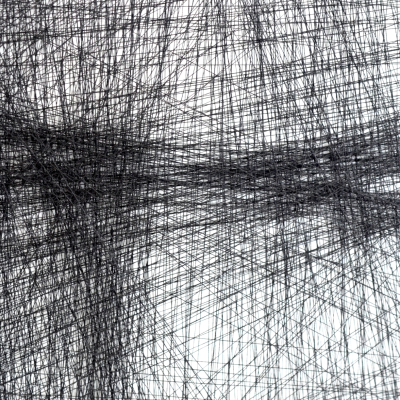
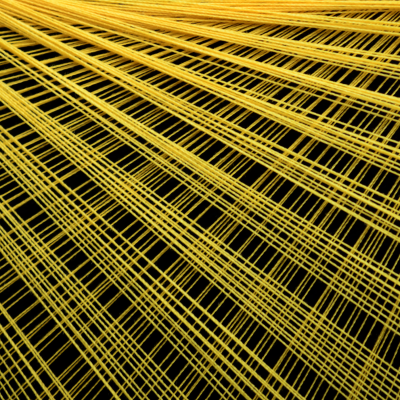
From a distance, the work can seem almost like a pencil drawing or a fine print. Up close, you see the truth: dozens, sometimes hundreds of small decisions, each line a deliberate choice.
That tension – between the simplicity of the shape and the complexity of the making – is what gives minimalist string art its particular calmness. It’s restrained, but never flat.
Geometry as Calm
We’re surrounded by geometry all the time: window frames, tabletops, tiles, screens. Our minds are used to reading lines and edges, organising the world into shapes.
Minimalist string art takes that everyday geometry and slows it down.
A circle, perfectly balanced on a wooden board, feels like an exhale.
A series of diagonal lines crossing each other at measured angles brings a sense of order.
A mandala-like pattern, built from repeated triangles or arcs, becomes a visual mantra.
There’s nothing to decode, no storyline, no “meaning” you have to work out. Your eye follows the rhythm of the threads and, almost without noticing, your breathing matches it.
In a busy life, that’s not a small thing to hang on your wall.
Rooms That Like to Breathe
Minimalist string art feels especially at home in spaces that value clarity.
Living areas
In a living room with clean lines and thoughtful furniture, a single geometric artwork can act as a kind of visual anchor. It doesn’t dominate the room; it steadies it.
You might not consciously notice it every time you walk past. But if you took it down, the room would feel oddly unfinished – like a sentence missing its final word.
Bedrooms
In a bedroom, where your mind is supposed to unclench, minimalist string art can be a gentle focal point: something for your eyes to rest on as you drift off, or as you come back to yourself in the morning.
Soft arcs and symmetrical patterns feel particularly at home here. They don’t ask questions. They simply hold the space.
Workspaces
In a study or home office, modern geometric string art mirrors the way we think: lines converging, ideas intersecting, structures emerging from apparent chaos.
On the wall behind a desk, it reads as intention. On calls, it says just enough about you: that you care about detail, about balance, about things being placed where they belong.
Colour, Space, and Silence
Minimalist art is often associated with neutral colours, and for good reason. When the palette is quiet, other things can speak more clearly: shape, rhythm, texture, light.
In the pieces at stringart.nz, colour is treated almost like a volume control.
- Monochrome designs – black on white, white on wood, a single soft tone – feel like a deep breath. They slip into most interiors without fuss, gently sharpening the room rather than changing it.
- Earthy neutrals bring warmth to cool rooms. String that echoes the colour of natural timber, clay, stone or linen makes a space feel grounded, without shouting “look at me”.
- Deliberate contrast – a pale thread on a dark board, or the reverse – adds a subtle kind of drama. Not the loud, attention-grabbing kind. The “something is happening here” kind.
Equally important is what’s not there: the empty spaces between the threads, the untouched parts of the board, the silence around the pattern. Minimalist string art respects that silence. It doesn’t try to fill every centimetre.
In a world where surfaces are constantly crowded with icons, notifications, and information, that restraint feels luxurious.
Why Texture Matters in a Minimal World
Minimal doesn’t have to mean sterile.
One of the quiet pleasures of string art is its tactility. The slight sheen of the thread, the tiny shadows cast by each line, the grain of the board beneath – together they give the piece a depth that flat prints can’t quite match.
As the light in the room changes through the day, the artwork changes too.
Morning light might skim across the threads, making the pattern crisp and clear. Evening light softens it, turning the geometry into something more atmospheric. A simple tilt of a lamp’s angle can change the whole mood.
In a very minimal interior, this small play of light and texture is often exactly what’s needed. It keeps the space from feeling cold, without compromising its clarity.
Less Distraction, More Presence
There’s an honesty to minimalist string art.
It doesn’t rely on bright colours or complex imagery to hold your attention. It trusts that a well-placed line, repeated with care, is enough. That a single shape can be revisited endlessly without becoming tiring.
In a home shaped around intention – what you keep, what you let go, how you want to feel – this kind of art fits naturally. It doesn’t demand to be the star of the show. It simply supports the whole.
You may not stand in front of it every day thinking, what a beautiful piece. But you might notice that the room feels different with it there. Quieter. More coherent. More like somewhere you can think clearly, or finally stop thinking for a while.
The Stringart.nz Perspective
At stringart.nz, the minimalist collection grows from a simple question:
What happens if we give geometry and texture as much room as possible – and let everything else fall away?
Each piece is designed and hand-crafted in New Zealand, with an emphasis on:
- clarity of form – nothing unnecessary, every line serving the pattern,
- balance – the right tension between filled and empty space,
- longevity – artworks that will still feel right on your wall years from now, even as trends shift.
They’re not designed to compete with everything else in the room. They’re designed to live with it – to sit comfortably above a timber sideboard, beside a plant, opposite a window full of sky.
Living With Minimalist String Art
The best test of any artwork isn’t how it looks in a photo. It’s what happens to your everyday life with it in the background.
Minimalist string art tends to do its work slowly:
- A wall that used to feel oddly bare becomes quietly intentional.
- A room that felt a bit scattered gains a centre of gravity.
- Moments of stillness – a cup of tea, a book, a paused email – feel slightly more held.
You stop thinking of it as “the art” and start thinking of it as part of the way your home thinks.
If you’re drawn to clean lines, natural materials and spaces with room to breathe, exploring the minimalist pieces at stringart.nz is a good place to start. Not looking for something loud or clever – just a pattern whose calm matches your own.
Sometimes, the most modern thing you can put on your wall is not another image, but a sense of order and quiet, drawn in thread.
Related Posts